|
Participation in the Scientific Conference Held by the Iraqi University on "Integration between Geographical Sciences and Artificial Intelligence"
2026-04-22
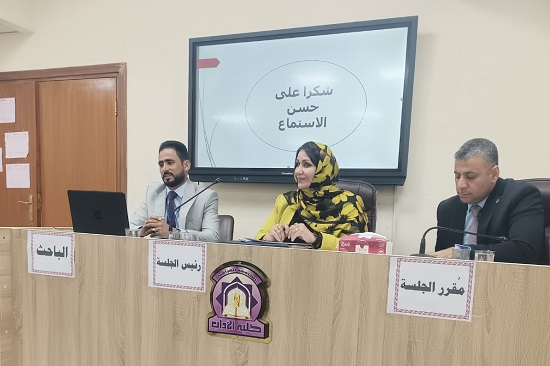
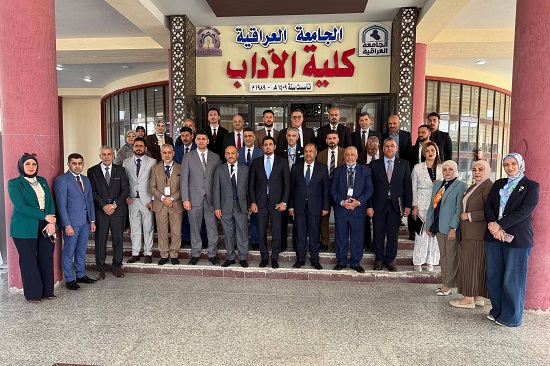
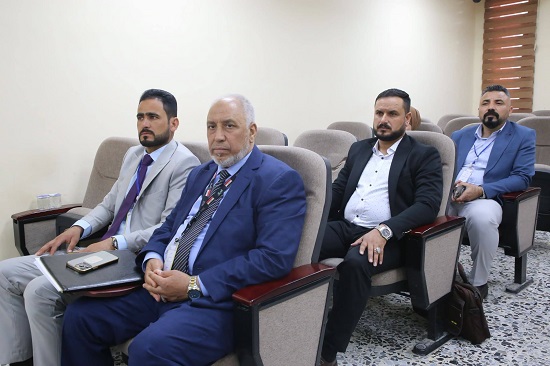
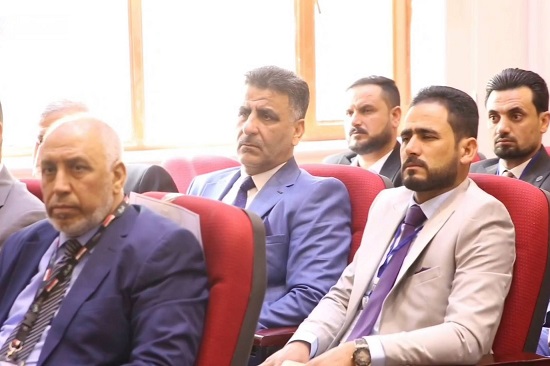
Assistant Instructor Mohammed Raheem Mohammed Abdul, a researcher in the Meteorology Department at the Upper Euphrates Center for Sustainable Development Research at University of Anbar, participated in the Fourth Geographical Scientific Conference, held by the Geography Department at the College of Literature, Iraqi University, under the slogan "Geography and Geographic Information Systems in Service of Society," entitled: "Integration Between Geographical Sciences and Artificial Intelligence for a Sustainable Environment," from April 15-16, 2026.
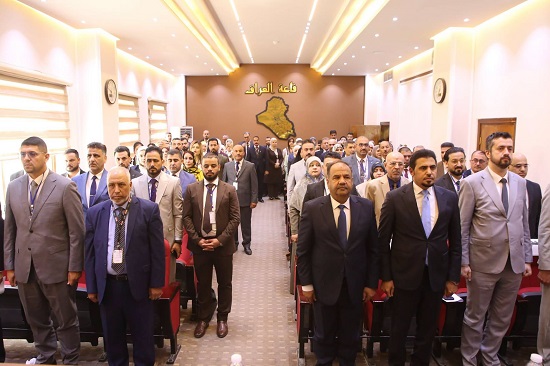
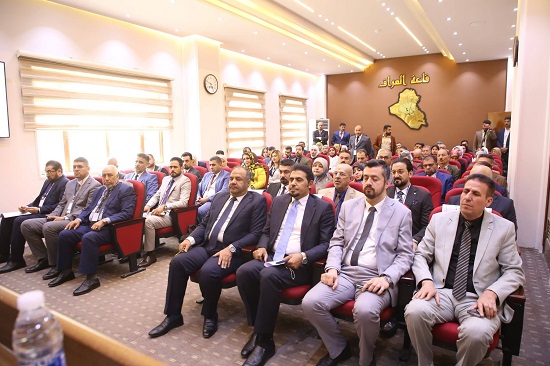
This conference witnessed broad scientific participation, with 58 research papers presented by 110 researchers from 14 Iraqi universities: Baghdad, Anbar, Mustansiriya, and Al-Qasim Green University. Kufa, Basra, Diyala, Salah al-Din, Wasit, Kalar, Dhi Qar, Babylon, Kirkuk, and Mosul (Ministry of Education Directorates, Karkh 1, Karkh 2, Anbar, and the Open Education College).
The conference witnessed a distinguished academic and scientific presence, reflecting the interest in knowledge integration, which contributed to enriching scientific discussions in the fields of geography and its various applications. The study presented by the researcher, entitled: “The Impact of Climate Change on Population Migration in Al-Rutba District,” aims to demonstrate the impact that climate change can have on population movements that may occur in arid and semi-arid regions in general in the western region of Iraq and Al-Rutba District in particular. Al-Rutba District is one of the most important districts located west of Anbar Governorate and Iraq. Therefore, it was one of the environmentally fragile desert areas and one of the areas most affected by climate change in Iraq. This has been reflected in population migration during recent years as a result of the rise in maximum temperatures over (36) years. This change increases the water requirements that the study area suffers from due to evaporation processes and a decline in rainfall amounts, which led to an increase in drought indicators, which led to the deterioration of natural resources, especially water resources, as groundwater levels have decreased significantly between fixed and mobile water.
#university_of_anbar
#Upper_Euphrates_Center_for_Sustainable_Development_Research
#SDG11
#SDG13
|